

It is impressive to realize that water covers 8.7% of the 13,537 km² of the beautiful Lanaudière region. There is water, and lots of it. This paradise is home to many species of fish that are just waiting to bend your fishing rods. To help you find your way around, here is some useful information to remember about the 10 most popular fish species in the region:
Brook trout (speckled trout): This is the most popular species in La Belle Province. It is found throughout Quebec, except in the Montreal area. The average length of catches varies from 20 to 30 centimeters. The world record of 6.57 kilograms (14.8 pounds) was caught on the Nipigon River in Ontario in 1916. Any brook trout weighing more than two kilograms can rightly be considered a trophy. Tips: Tributaries and windward shores are usually the best spots, as food is abundant there and trout are very fond of these areas. Underwater structures provide shelter for trout throughout the season. The most productive lures for catching this species are the Williams Wabler with a leader and small Twister, the Lake Clear Wabbler with a leader and earthworm, the 2-1/4″ Sassy Stingum with a wiggle or with a leader behind a spoon, the small Mepps 0 and 1, the Geneva spoon with a leader and earthworm, the Wabler Lite W55 with a leader and earthworm or Mooselook Midget 112, the Rebel Tracdown Ghost Minnow TD47, the Bobby Garland Baby Shad 1 ½ with Crappie Pro Mo Glo Jig head, the Flasher F1 or F2 with a leader and earthworm, and the Toronto Wobbler with a leader and leader.
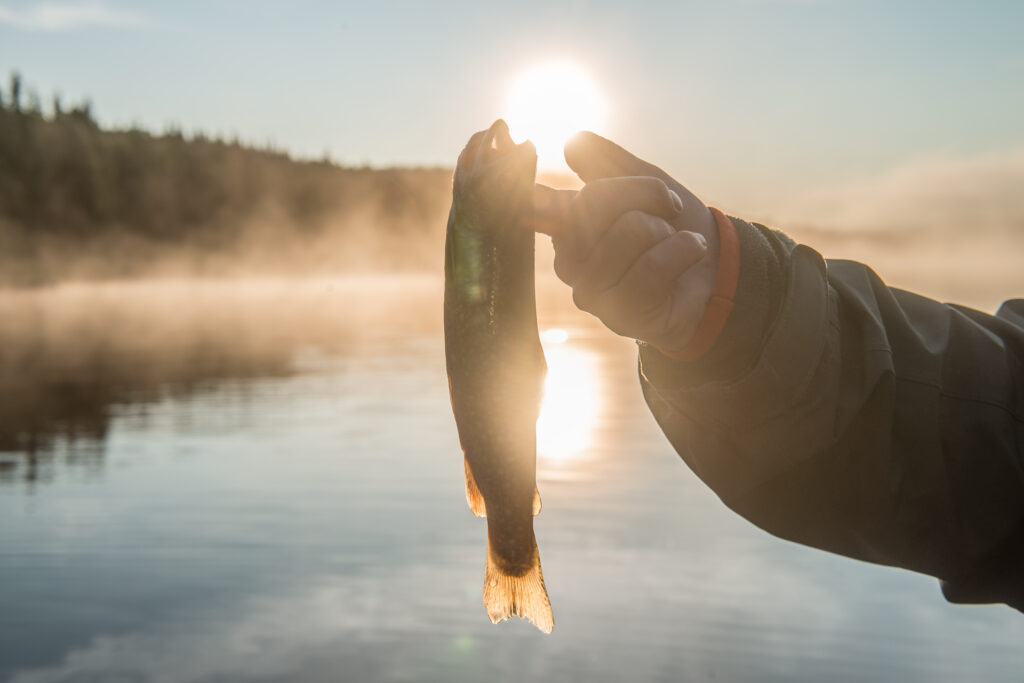
Rainbow trout: Its coloration is a true masterpiece. Most anglers catch trout weighing between ¼ pound and 1¾ pounds. It is the most sought-after fish species in Western Canada. In fact, the national record of 15 pounds (33 pounds) was caught there. The world record is 19 kilograms (42.2 pounds). The rest of the year, this type of fish seeks out cool waters between 10 and 15°C. Tips: Vary your retrieval speed frequently and don’t hesitate to visit tributaries and underwater structures. Later in the season, a downrigger is a very useful tool. For good results, I recommend the Rebel Micro Minnow, the Streamer, the Black Fury No. 1 and 2, the Williams Quick Silver, the LiveTarget Rainbow Smelt, the Wee Frog, the Mooselook Wobbler, the Williams Wabler W40, the Rebel Jointed Minnow, and the Winnie by Savant.
Lake trout: The oldest fish in our waters, lake trout can live up to 45 years. They average between 1 and 5 pounds, but occasionally specimens weighing over 12 pounds are caught. The world record of 30 kilograms (66.5 pounds) was caught in Canada, in the Northwest Territories, at Great Bear Lake. Lake trout is the species with the widest geographical distribution in the country. Tips: Locate an underwater structure or steep escarpment and jig with a soft lure such as a Twister. Look for depths where the water temperature is between 7 and 10°C to easily find these fish. Here is an excellent selection of lures for good results: Bomber Long A plug, Williams Wabler, Ripple Shad jig, Dartee spoon, Mister Twister 6-inch white Twister with jig head, Bully, Heddon Sonar, Yum Scottsboro Swim Bait 4.5 inches on jig head, Williams HQ35, and Suspending Rattlin Rogue Smithwick.
Walleye: This percid, which has a black cousin, can live up to 12 years. It has large glassy eyes and a white spot on the underside of its tail. This fish prefers a water temperature between 15 and 20°C. In the spring, it likes shallow areas covered with sand or gravel. Later in the season, it can be found in deeper waters. The best spots to fish are steep drop-offs, underwater islands, along channels, and weed beds bordering a drop-off. Tips: Once you find a promising spot, try a jig with a rubber tail or worm rig and drift over these productive areas two or three times. For great catches, try the 4-inch Double Tail Grub with a jig head, the Mepps Bucktail Jig, the Lindy Lil’Guy worm rig with Lindy No-Snagg Slip Sinker and 6″ Mister Twister Phenom, the Bandit Walleye Deep/Shallow, the Lindy Live Bait Jig with leech or earthworm, the 3-inch Sassy Shad, the Gold Perch Wally Diver Cotton Cordell, the 3.5-inch YUM Scottsboro Swim Bait on a jig head, the 3-inch Mister Twister Meeny with jig head, and the Salmo Freediver are very effective.

Largemouth bass: This formidable predator, which can consume its own weight in five days, has a reputation for being indiscriminate and attacking any bait. The latter statement is true when it is very aggressive. However, when it is sluggish, it is a different story altogether. The world record for this big guy, which can live for a quarter of a century, is 25 kg (55.1 pounds). The Canadian record of 19.39 kg (42.12 pounds) comes from Stoney Rapids in Saskatchewan. Its comfort zone is between 18 and 23°C. Tips: Don’t hesitate to cast your presentations very close to aquatic vegetation and near grass lines. Pike hide there to wait for their prey. Vary your retrieval speed. I like to use the following lures to enrage this angry predator: the Booyah Pikee ½ oz spinnerbait, the Rebel Buzz’n Frog, the Heddon Crazy Crawler, the Creek Chub Jointed Pikie, the Aglia Tandem Mepps, the Arbogast Buzz Plug, the Syclops S3, the Whitefish C70 and C90 spoons, the Canoe Wobbler spoon, and the Williams Wabler W60 and W70.
Landlocked salmon: This salmon performs incredible aerial jumps when fought by anglers. The world record is 10.2 kilograms (22.8 pounds). Its spawning season is in the fall. It seeks cool waters between 11 and 16°C. In spring, it is fished on the surface, usually at a depth of less than five meters. When the water reaches 11°C, it will dive deeper. Tips: Vary your retrieval speed often to outsmart the landlocked salmon. Try several types of spoons and jigs. Choosing the right lure can be difficult because, depending on its mood, it will sometimes be tempted by a slow action, while at other times it will go for a lure with a very aggressive swimming action. A selection I like to use for fishing this species consists of the Bomber Square A, Rebel Humpback, Williams Midget Wabler, Savant Winnie spoon, Williams Quick Silver, Slick Stick Salmo, Mooselook 140, Mepps Comet #3, Thinfish, and J49 Rebel jointed Minnow.
Smallmouth bass: Depending on the specimen, its color ranges from dark green to brown with darker vertical stripes, and its belly is whitish. More than 75% of this glutton’s diet consists of crayfish. Before the mating season, which runs from May to July, the male prepares a nest on a gravel bottom. The world record is 4.93 kg (10.14 pounds). The Canadian record of 4.14 kg (9.13 pounds) was caught at Birchbark Lake in Ontario in 1954. This fish prefers a water temperature between 17 and 22°C. Tips: Try to find rocky areas, cast a floating lure first, let it sit for a few seconds, then reel it in with short, jerky movements. Bass can’t resist this kind of presentation. My favorite lures for catching this fierce fighter are the War Eagle Screamin Eagle spinnerbait, the Yum Dinger, the Bandit Series 100 and 200, the Big O, the 5″ Stick bait Comida stick bait, the 4-inch Ring Worm Mister Twister on a drop shot rig, the Mepps Bronze Slammer, the Heddon Super Spook BOYO, the Power Jerk Shad, and the Strike King Coffee Tube 3.5 with a sonic jig head.
Large-mouth bass: This species, considered the most popular among our American neighbors, offers considerable challenges. These tough opponents love to frequent grass beds and water lilies. Unlike its small-mouth cousin, which is generally 20% smaller, its jaw extends beyond the corner of its eye. It likes warm waters. The proof: its preferred temperature range is between 21 and 26°C. Its spawning season is from mid-May to July. Tips: When most anglers come across dense weed beds, they turn back, thinking that no fish live there. Next time, try a weedless spoon or plastic worm—you’ll be surprised. This formidable opponent lunges with its mouth wide open to grab lures such as the War Eagle long-bladed spinnerbait, the Rebel Wee-Crawfish, the Booyah Mobster Swim Jig with Yum Craw Chunk trailer, the 6-inch Phenom, the Mister Twister Sassy Swimmer, the Bomber Fat Free Series, the Heddon Super Spook, the Booyah Prad Crasher Frog surface lure, the Strike King Tour Grade Swimming Jig with Gene Larew 4″ Salt Craw, and the Yum Tip Toad.
Muskellunge: It is the largest member of the pike family and the second largest fish in Quebec, after the sturgeon. This predator, which can live for three decades, has 6 to 9 mandibles on each side of its jaw, compared to its cousin, the pike, which has only five. The world record is 31.7 kg (69.15 pounds). The Canadian record of 29.43 kg (65 pounds) was caught in Georgian Bay, Ontario, in 1988. Tips: Retrieve your lure in a jerky motion, always varying the speed, and don’t hesitate to reel it in faster than you would with other lures. If a muskie follows your lure without biting, dip the tip of your rod into the water and move it in a figure-eight pattern. The Bomber Magnum Long A, Arbogast Jitterbug G700, Creek Chub Knuckle-Head, large Williams W70 Wabler, the Musky Killer Mepps, the Cotton Cordell Red Fin C10, the Williams Whitefish C90, the Aglia Tandem, the Regular Bull Dawg 9 inches, and the LuhrJensen Kwikfish K16 form a very effective set for outwitting this large predator.
Yellow perch: This species has often saved the day for many fishermen who would say, “The only fish I caught was a…”. When prepared as fillets, its selling price is comparable to that of filet mignon. The spawning season for these small percids, which have an average lifespan of eight years, runs from April to May. The comfort zone for this orange-finned fish is between 18 and 23°C. The Canadian record is 1.33 kg (2.15½ pounds) and the world record is 2 kg (4.3 pounds). Tips: They are very easy to catch near grass lines and man-made structures. This type of fishing may seem trivial, but try it with ultra-light equipment and you will surely change your mind. For great catches, use the 2-inch Teeny Twister, the Mister Twister mini crayfish, the Little Joe Heart-of-Steel Spinners with earthworms, the Sassy Stingum, the Mepps Black Fury 0 and 1, the Rattl’n Flyer Spoon, the Bobby Garland Baby Shad Swimmer, the mini tri-color Twister tube, and the Rebel Bumble Bug.
Patrick Campeau
Professional Fisherman